Table of Contents
- How to Choose a Charter Bus for Youth Sports Teams
- Quick Comparison: Top Charter Bus Options
- Youth Sports Team Transportation: Minibuses vs. Motorcoaches
- Sports Team Bus Rental Cost: What Drives the Price
- Charter Bus for Tournaments: Booking Timeline and Logistics
- Charter Bus Luggage and Equipment Storage: What Fits Where
- Safety and Supervision on Youth Sports Team Charters
- Frequently Asked Questions
Last Updated: October 12, 2026
How to Choose a Charter Bus for Youth Sports Teams
Booking a charter bus for youth sports teams comes down to four things: matching vehicle size to your roster, confirming the bus can carry every bat bag and cooler, verifying the operator’s safety record, and locking in your reservation before peak tournament season fills the calendar.
At Holiday Coach Lines, we have moved athletic programs, school teams, and youth leagues for decades, and the same questions come up every season.
Most teams start their search too late. The programs that travel smoothly are the ones making calls six to eight weeks out, not six days.
Quick Comparison: Top Charter Bus Options
| Provider | Vehicle Options | Booking Deposit | Best For |
|---|---|---|---|
| Holiday Coach Lines | 57-seat motorcoaches with Wi-Fi and USB chargers | Contact for quote | Teams wanting full-size coaches and vetted drivers |
| Connexxions Bus | Mid-size buses and full-size motorcoaches | Contact for quote | Comparing bus sizes before committing |
| Coach USA | Charter buses for teams and fan groups | Contact for quote | Teams plus supporters traveling together |
| Starline Collection | Youth sports charter service | Contact for quote | Leagues and tournament organizers |
| CharterUP | Sports team bus rentals | 10% due at booking | Teams wanting a stated deposit structure |
| Ideal Charter | Sports team transportation | Contact for quote | Season-long contracts versus one-off trips |
| National Bus Charter | Sports trip bus rentals | Contact for quote | Long-term rental pricing inquiries |
For most youth programs, a full-size motorcoach makes sense once your roster plus coaches and chaperones passes roughly 30 people.
Youth Sports Team Transportation: Minibuses vs. Motorcoaches
Youth sports team transportation splits into two vehicle families: minibuses for smaller rosters and short hops, and motorcoaches for full squads traveling longer distances.
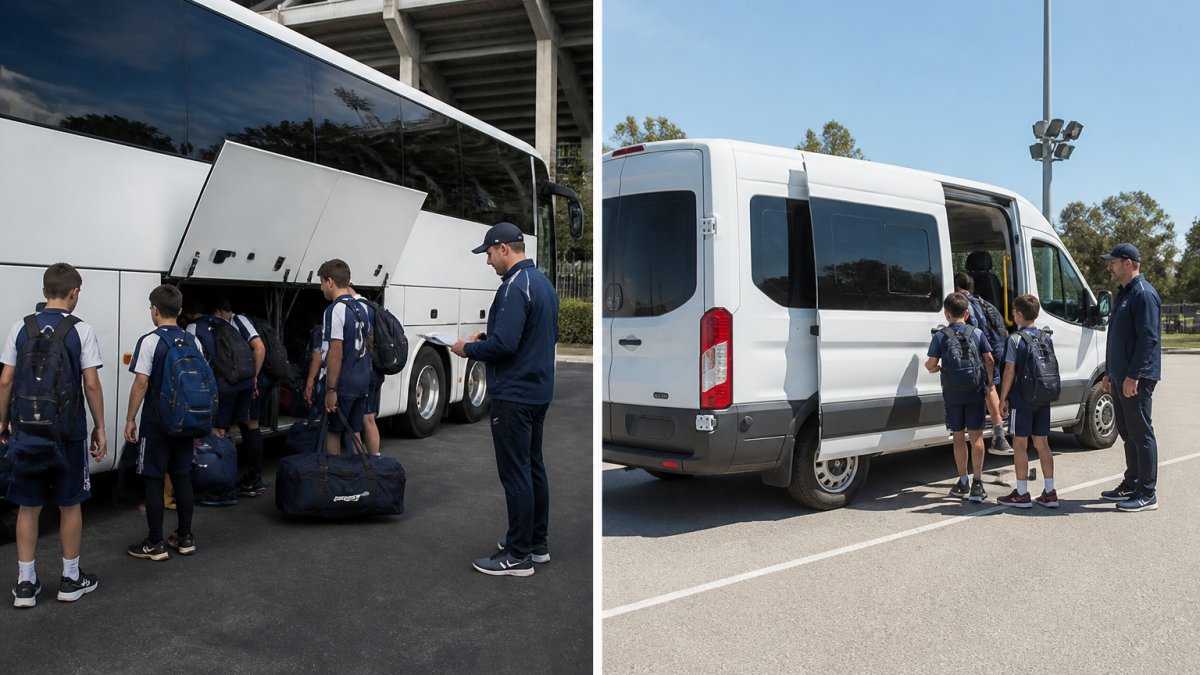
A minibus typically seats anywhere from 15 to 35 passengers. These work well for a single team plus a couple of coaches heading to a nearby away game.
A motorcoach seats up to 56 or 57 passengers.
Passenger Capacity by Vehicle Type
- 56-passenger motorcoach: a complete program with room to spread out
Count bodies before you count seats. A roster of 22 players plus three coaches, a trainer, and four parent drivers who decide to ride along changes your vehicle math fast.
Sports Team Bus Rental Cost: What Drives the Price
Sports team bus rental cost depends on group size, trip distance, trip duration, and how often you travel. There is no single flat rate, and any operator quoting you a number before asking those questions is guessing. What separates a smooth budget from a surprise invoice is understanding how the quote is built and which line items tend to grow.
The Five Variables That Move Your Quote
- Passenger count: If your roster plus coaches and chaperones lands at 34, price a 56-passenger motorcoach.
- Distance: a cross-state trip to a tournament costs more than a 40-minute ride to a rival school. Many operators price by the mile beyond a set local radius, so a 200-mile round trip and a 400-mile round trip are not a simple doubling, driver hours and fuel surcharges stack on top.
- Duration: a day trip versus an overnight with driver layover time. If the driver stays with the vehicle overnight, expect a per-day or per-night charge for the driver’s lodging and time, even when the bus sits parked.
- Frequency: a one-off game-day booking versus a season-long contract. Season contracts can lower the per-trip rate, but only if your schedule is locked.
- Timing: peak tournament weekends and playoff season tighten availability, and operators price scarce vehicles accordingly. Booking a Saturday in October for a spring tournament usually beats booking the same trip three weeks out.
Fees That Show Up on the Final Invoice
Ask any operator to itemize these before you sign, because they are the line items that turn a quote into a surprise:
- Fuel surcharge: often quoted separately and adjusted with diesel prices.
- Driver gratuity: frequently not included; confirm whether it is expected and how much.
- Overnight and layover fees: driver hotel, per diem, and parking.
- Tolls and parking: some operators fold these in, others pass them through.
- Wait time: if your game runs long or a tournament bracket shifts, hourly wait charges can apply.
Splitting the Cost Across Families
A common pattern for youth programs is to divide the total quote by the number of traveling players rather than by total seats, since coaches and chaperones typically ride free or at a reduced rate. If a 56-passenger motorcoach quote works out to a per-player figure your families can absorb, that number is the one to bring to a parent meeting, not the total.
If a season contract includes a cancellation clause, read it before signing, tournament brackets change, and so do rosters.
For a firm number, request a rental quote with your specific dates, passenger count, and route. Holiday Coach Lines provides quotes based on your group’s actual needs rather than a generic rate card, and we will walk you through which fees are included and which are passed through.
Charter Bus for Tournaments: Booking Timeline and Logistics
A charter bus for tournaments needs to be booked earlier than a regular-season game trip. Tournament weekends concentrate demand, and the best-equipped coaches go first. The teams that travel smoothly are not the ones who called earliest, they are the ones who arrived at the call with their numbers already settled.
Booking Windows by Trip Type
- Local away games: two to three weeks ahead
- Regional tournaments: four to six weeks ahead
- Multi-day or out-of-state playoffs: six to eight weeks ahead or more
- Holiday-weekend tournaments: add two weeks to any of the above; those dates fill first
The Pre-Booking Checklist
Work through these before you call an operator. Each one changes the vehicle or the quote.
- Lock the roster. Collect a firm headcount of players, coaches, trainers, and chaperones, not an estimate. A roster of 22 players plus three coaches, a trainer, and four parent drivers who decide to ride along changes your vehicle math fast.
- Confirm the schedule. Get game times, arrival requirements, and the tournament’s check-in window in writing from the event organizer. Coaches often need to be on site earlier than players.
- Map the route and stops. Identify pickup and drop-off points, school lot, field house, or a central meeting spot, and decide whether you need a rest stop on longer hauls.
- Decide on overnight stays. If the team is staying over, confirm whether the driver stays with the vehicle or departs and returns. That detail affects both cost and your game-day flexibility.
- Count the gear. Tell the operator up front if you are carrying bat bags, stick bags, equipment carts, coolers, or team tents. Storage is assigned by vehicle, and bulky gear can push you into a larger coach.
- Ask about accessibility and medical needs. If any athlete uses a wheelchair or has a medical accommodation, raise it at booking so the operator can assign an accessible vehicle.
- Get the quote in writing. Confirm what is included, fuel, gratuity, tolls, wait time, and what is passed through.
- Collect deposits from families. Most operators require a deposit to hold a tournament-weekend vehicle. Set your family payment deadline earlier than the operator’s deposit deadline so you are not fronting the money.
Tournament-Weekend Logistics That Trip Up Teams
- Bracket shifts. Tournament schedules move. Build buffer time into your departure and return plans, and ask the operator how wait time is billed if a game runs long.
- Multi-game days. If your team plays twice in one day, the bus may stay parked on site between games. Confirm whether the driver remains with the vehicle or leaves and returns.
- Return timing. Know whether you are leaving the same night or staying over. A late-night return after a long day is a different quote than an overnight stay.
- Driver hours. Long trips need rest breaks built into the schedule, and federal rules limit how long a driver can be on duty. If your return trip pushes past those limits, the operator may need a second driver, a cost you want to know about before you sign, not after.
Build a shared document with the roster, schedule, pickup point, and operator contact, and send it to every parent before departure. On a tournament weekend, the parent who cannot find the bus is the one who calls you at 6 a.m.
For tournament travel, confirm whether your driver stays with the vehicle or departs and returns.
Charter Bus Luggage and Equipment Storage: What Fits Where
Charter bus luggage and equipment storage is the detail that catches teams off guard. Motorcoaches carry gear in underfloor bays, and those bays fill faster than people expect when you’re moving a full roster’s worth of equipment.
What typically goes where:
- Underfloor bays: duffel bags, coolers, folding chairs, team tents
- Overhead racks: small personal bags, backpacks, helmets
- Interior floor space: limited, and it blocks aisles if overloaded
Sports equipment is the wild card. Bat bags, stick bags, and equipment carts eat space quickly. If your team carries bulky gear, tell the operator when you book so they can assign the right vehicle.
Ask your players to pack in soft duffels rather than hard cases. Soft bags compress into odd-shaped gaps in the underfloor bay, while rigid cases waste space and are harder to stack.
Label every bag with the player’s name and jersey number. On a tournament weekend with two games in one day, unlabeled identical black duffels turn into a 20-minute sorting exercise.
Safety and Supervision on Youth Sports Team Charters
Safety and supervision on youth charters is where parents and athletic directors focus their questions, and rightly so.
Questions worth asking any operator:
- Are drivers background-checked and screened for safety records?
- Is the company approved by the US Department of Transportation and the Interstate Commerce Commission?
- What is the maintenance schedule for the fleet?
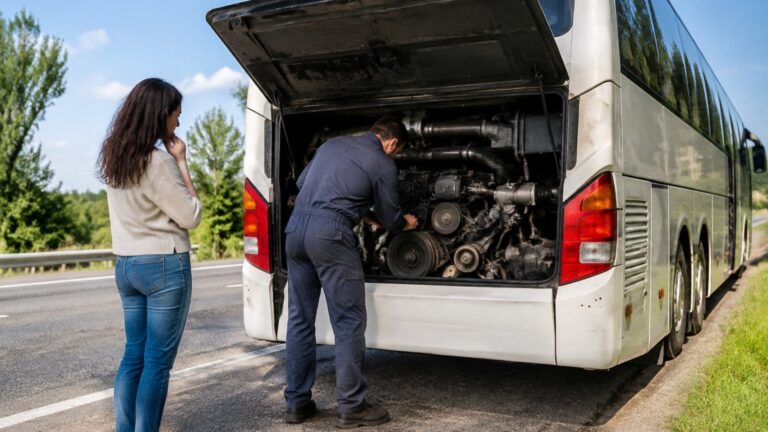
- What happens if a bus breaks down mid-trip?
Holiday Coach Lines is approved by the US Department of Transportation and the Interstate Commerce Commission, and our drivers are hand-picked for safety records and customer service.
Your side of the equation matters too. Assign chaperones by bus section, take a headcount at every stop, and set a clear rule that players stay with the group at rest stops.
Confirm the operator’s backup plan before you travel. A reputable company has a process for getting another vehicle to your group if something goes wrong, and they should be able to explain it plainly.
Frequently Asked Questions
What are the benefits of a charter bus for a youth sports team?
A charter bus keeps the whole team together, which simplifies supervision and arrival timing. Players can rest, review game plans, or sleep instead of focusing on driving. It also removes the risk of parents navigating unfamiliar routes to away games. For equipment-heavy sports like baseball or softball, the undercarriage storage holds bats, bags, and coolers without crowding the cabin.
How far in advance should you book a charter bus for a tournament?
For peak season weekends and regional tournaments, start your reservation four to six weeks ahead. Holiday weekends and playoff runs fill faster. If your tournament falls during a busy travel period, eight weeks gives you more vehicle choices. Booking early also locks in your pickup time before other teams claim the same departure slots.
How much luggage and sports equipment can a charter bus hold?
A full-size motorcoach typically has two large undercarriage bays that hold team duffels, coolers, and bulky gear like lacrosse sticks or folding tents. A 56-passenger motorcoach handles a full roster’s bags plus equipment. Confirm your equipment list with the company when you request a quote.
Can parents and coaches ride with a youth sports team on a charter bus?
Yes. Coaches and chaperones ride in the main cabin with the players. Let the reservation team know your adult-to-player ratio when booking so they assign the right vehicle size.
How do you keep players safe during charter bus travel?
Choose a company approved by the US Department of Transportation, which confirms the operator meets federal safety standards. Ask about driver background checks and hours-of-service limits. On board, assign seats, take a headcount before departure, and keep a chaperone near the rear. Review emergency exits with the team before the first trip. A written roster with emergency contacts adds another layer of preparedness.
Coordinating travel for a full roster, coaches, and a mountain of equipment is a lot to manage, and one weak link in the transportation chain can derail a season. Holiday Coach Lines handles that part for athletic programs with 57-seat motorcoaches, free Wi-Fi and USB chargers, and drivers vetted for safety and service. Request a quote today and let us build a travel plan around your team’s schedule.