Quick Summary
To plan a museum trip for a senior group in Florida, choose an accessible museum, book group admission and a guided tour, and reserve a comfortable charter bus, starting months ahead. Confirm elevators, seating, and mobility aids before booking. Build the schedule around boarding, rest stops, and seated breaks.
- Start planning months before the trip, since accessible sites and buses fill up early.
- Ask the museum in writing about elevators, bench seating, and borrowable wheelchairs or scooters.
- Get written confirmation of group admission rates, tour time, and cancellation policies.
- Choose a coach with reclining seats, air conditioning, and room for walkers or small bags.
- Plan one restroom break on any drive longer than about 90 minutes.
Table of Contents
- Why Senior Museum Trips Need Earlier Planning Than Other Group Outings
- Step 1: Choose an Accessible Museum in Florida
- Step 2: Set Up Museum Group Tour Planning and Admission
- Step 3: Arrange a Charter Bus for Senior Groups
- Step 4: Build a Comfortable Itinerary and Pacing Plan
- Senior Group Outing Checklist: What to Prepare and Bring
- Booking Your Senior Group Museum Trip with Holiday Coach Lines
- Frequently Asked Questions
Why Senior Museum Trips Need Earlier Planning Than Other Group Outings
Planning a Florida museum trip for senior groups takes more lead time than most group outings. Accessible museum tours, charter bus availability, and senior-friendly pacing all need to be locked in early. Holiday Coach Lines has put together this step-by-step guide to help coordinators get it right.
Senior groups often have needs that younger groups do not. Mobility aids, rest breaks, medication schedules, and shorter walking distances all shape the plan. A coordinator who waits too long may find that the best accessible sites are already booked.
Start early. Most of the work happens months before the day of the trip.
Here is what makes senior trips different:
- Accessibility checks take longer. Some older buildings have stairs, narrow doorways, or limited seating.
- Group tour reservations can fill up, especially during school breaks and peak tourist seasons.
- Bus scheduling needs time to confirm driver, vehicle, and pickup details.
- Health and comfort planning needs room for rest stops, restrooms, and meal breaks.
Each of these steps adds time. Planning early gives the group more options and less stress.
Step 1: Choose an Accessible Museum in Florida
The best first step is choosing a museum that fits your group’s physical needs. Look for sites with ramps, elevators, wheelchair access, accessible restrooms, and seating throughout the galleries.
Think about the size of your group too. Some museums handle large tour groups well. Others have small galleries that get crowded fast.
Consider these questions before you decide:
- Are there elevators to every floor?
- Is there bench seating in the main exhibit halls?
- Are wheelchairs or mobility scooters available to borrow?
- Can the museum accommodate a group of your size at one time?
How to Check Accessibility Before You Book
Do not rely only on a museum’s general website. Call the group sales or visitor services office and ask specific questions. Request a floor plan if one is available. Ask whether the museum offers quiet hours or reduced-crowd visiting times.
A common mistake is assuming a building is accessible because it is newer. Many modern museums still have steep grades, uneven walkways, or long distances between exhibits. Walk through the route in your mind, or ask the museum to describe it step by step.
Step 2: Set Up Museum Group Tour Planning and Admission
Once you have a short list of museums, reach out about group tours. Most museums offer discounted group admission for pre-booked parties. Ask about minimum group sizes, advance notice requirements, and whether a guided tour is available.
Guided tours can work well for senior groups. A docent can slow the pace, point out seating areas, and keep everyone together. Ask whether the tour can be shortened or split into smaller sections.
Get written confirmation of:
- Group admission rates in USD
- Tour date and time
- Number of guests and staff included
- Any accessibility accommodations
- Cancellation and change policies
Keep a copy of the confirmation with your trip documents.
Step 3: Arrange a Charter Bus for Senior Groups
Transportation is often the biggest logistical piece of the trip. A charter bus lets the whole group travel together with a set pickup point, a set schedule, and room to move around. For senior groups, comfort features matter a great deal.
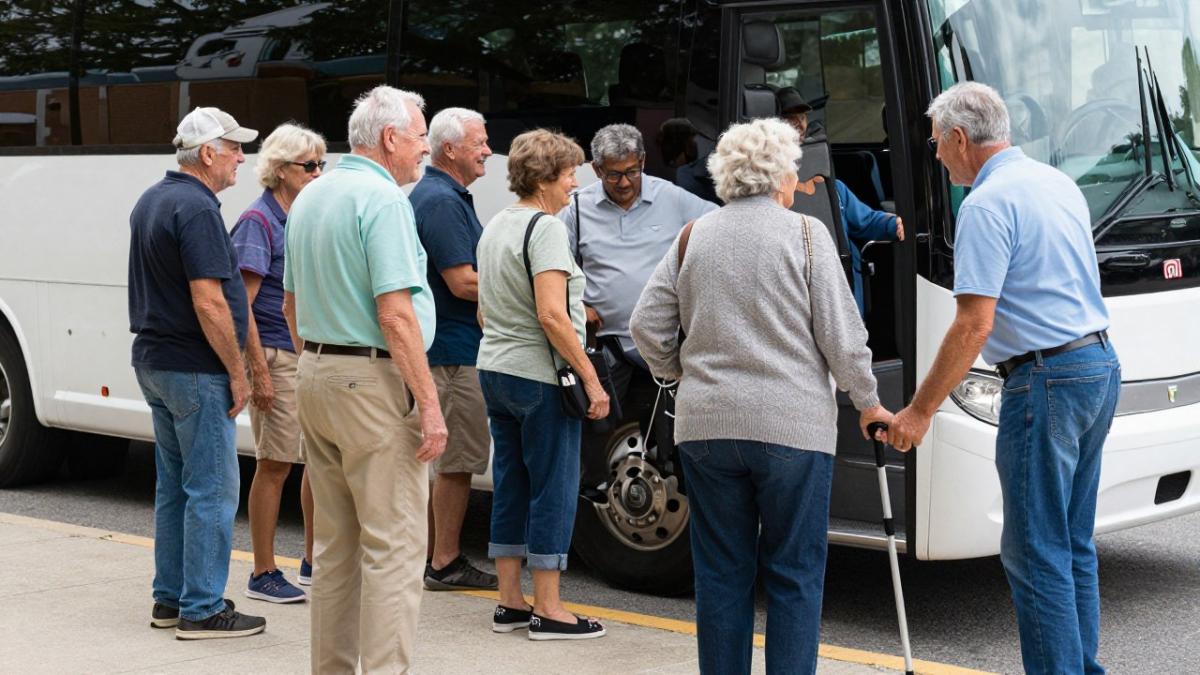
Look for a coach with reclining seats, air conditioning, and enough space for walkers or small bags. Ask the provider about driver experience with older passengers.
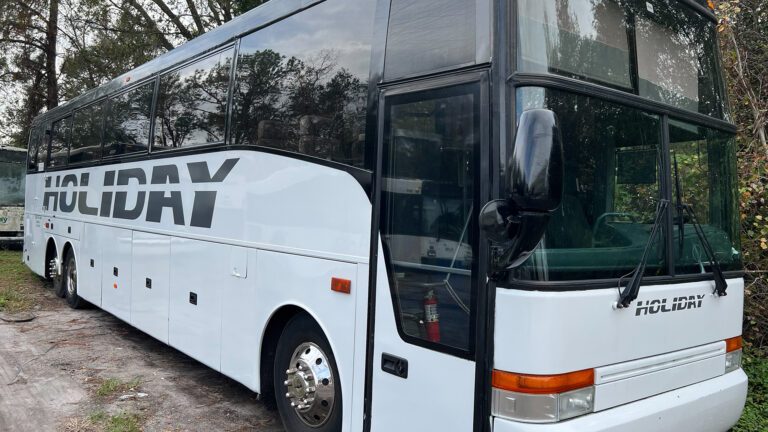
Our fleet is equipped with modern amenities you need to make your journey comfortable and enjoyable, including air conditioning and reclining seats. You can see the coaches available for group trips before you book.
Holiday Coach Lines provides charter bus service throughout Florida. Our company background and approach to safe group travel are outlined on our company page.
For guidance on lead times, read how to book a charter bus at the right time.
Pricing Breakdown for Group Logistics
Pricing depends on quantity, dates, and delivery. Request a quote from Holiday Coach Lines for current rates.
Use this checklist when you compare quotes:
- Distance: Round-trip miles from pickup to destination
- Hours: Total time the bus is reserved, including waiting time
- Vehicle size: Motorcoach capacity for your headcount
- Season: Peak dates often cost more
- Extras: Tolls, parking, fuel surcharges, and driver meals
You can learn what drives each charter bus quote to understand the numbers better.
Step 4: Build a Comfortable Itinerary and Pacing Plan
A senior-friendly itinerary moves at a relaxed pace, but the schedule that matters most is the one before and after the museum visit. Door-to-door logistics, gathering the group, loading mobility aids, timing restroom breaks, and getting everyone back on the coach, are where most group trips lose time. Build the plan around those transitions, not just the gallery hours.
Try this structure as a starting template:
- Pre-trip gathering (15-20 minutes before departure): Set a single meeting point with seating and shade, and assign one coordinator to check names off a roster.
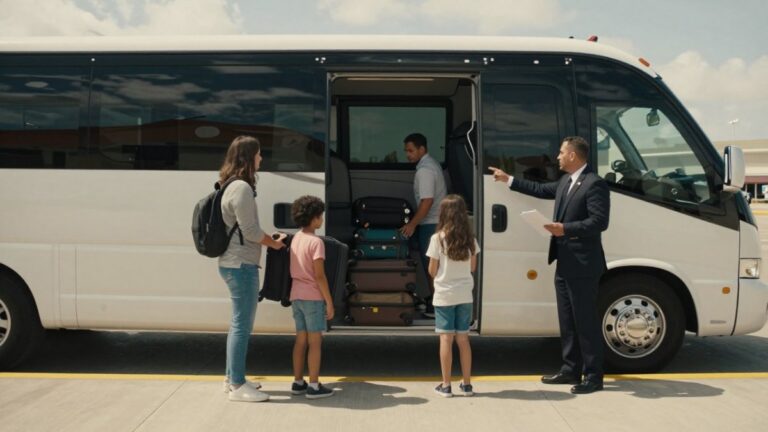
- Boarding and mobility-aid loading: Load walkers and wheelchairs first so they are accessible at the destination, and seat guests who need the most assistance near the front. Count the group at the door, not after the coach is moving.
- En route rest stop: Plan one restroom break on any drive longer than about 90 minutes, and confirm the stop has accessible facilities.
- Arrival and museum check-in: Give the group 10-15 minutes to disembark, use the restroom, and gather inside the lobby before the tour begins. Confirm the group sales contact and tour start time with the museum the day before.
- First gallery block (60-90 minutes): Keep the group together and identify a seating area where anyone can rest without leaving the tour.
- Seated lunch break: Choose a location with accessible seating and enough room for the whole group at once, or split into two shifts if the venue cannot seat everyone together.
- Second gallery block (about one hour): Focus on favorite exhibits and allow guests to sit out a segment if they prefer.
- Return boarding and rest stop: Count the group before departure and plan a rest stop on the way home.
Coordinating Staggered Arrivals and Meeting Points
If guests are arriving from different locations, set one primary pickup point and one backup point, and publish both in large print. Ask guests to arrive 15 minutes before the scheduled departure so the coach is not held at the curb. For groups that include guests arriving by car, designate a drop-off zone and a separate parking area so the coach can load without blocking traffic.
A common pattern is to assign a “sweep” role, one staff member who stays at the back of the group and confirms no one is left behind at each transition. That role is especially useful at museums with multiple exits and at rest stops.
Contingency Planning for Delays and Emergencies
Build a simple contingency plan and share it with the group before departure:
- Flight or traffic delays: If the group is arriving by air, keep the coach provider informed of the flight number and build a buffer between landing and departure. Ask the provider what their policy is for waiting time if the group is delayed.
- Museum schedule changes: Confirm the tour time 24-48 hours in advance and have the group sales contact’s phone number on hand.
- Medical or mobility issues: Carry a list of emergency contacts and any known medical needs, and identify the nearest hospital or urgent care to the museum before the trip.
- Backup transportation: For groups large enough to need more than one vehicle, confirm that the provider can supply a backup coach or van if the primary vehicle has a mechanical issue.
Share the itinerary with every guest in advance. Print large-font copies for those who need them, and include the coordinator’s phone number, the museum address, and the return departure time on every copy.
Assign one person to count heads and confirm the meeting point at each transition, in writing, before the trip.
The table below summarises the key timings and checkpoints from the itinerary, so coordinators can plan each transition.
| Stage | What to do | Time or frequency |
|---|---|---|
| Pre-trip gathering | Set one meeting point and check names off a roster | 15-20 minutes before departure |
| Boarding | Load mobility aids first and count the group at the door | Before the coach moves |
| En route rest stop | Choose a stop with accessible facilities | Once on drives over about 90 minutes |
| Arrival and check-in | Disembark, use restrooms, and gather in the lobby | 10-15 minutes |
| First gallery block | Keep the group together and identify a seating area | 60-90 minutes |
| Seated lunch | Use accessible seating or split into two shifts | Midday break |
| Second gallery block | Focus on favorite exhibits and allow sitting out | About one hour |
| Return boarding | Count the group and plan a rest stop on the way home | Before departure |
Senior Group Outing Checklist: What to Prepare and Bring
Use this checklist in the weeks before departure:
- Confirm the museum’s accessibility details in writing
- Book group admission and tour time
- Reserve the charter bus and confirm the pickup point
- Collect guest medical needs and emergency contacts
- Arrange wheelchairs or mobility aids if needed
- Plan restroom and rest stops along the route
- Pack water, snacks, and any medications
- Bring a first aid kit and copies of contact numbers
- Send a final itinerary to all guests and family members
- Count guests at boarding and at each stop
Booking Your Senior Group Museum Trip with Holiday Coach Lines
A museum trip for a senior group works best when every piece fits together. The museum must be accessible. The tour must match your group’s pace. Holiday Coach Lines can handle the transportation side of your plan, with professional, hand-picked drivers and well-maintained motorcoaches with free Wi-Fi and USB chargers.
Ready to plan your trip? Request a quote and our team will help you build a schedule that works for your group.
Frequently Asked Questions
What is the easiest way to get a senior group to a Florida museum?
For most senior groups, a charter motorcoach is the simplest option because everyone travels together, luggage and mobility aids stay on one vehicle, and the driver can handle a single scheduled pickup and drop-off. Confirm that the bus has a clear boarding area, that the pickup spot allows for a few minutes of parking, and that the route avoids long walks from the curb to the museum entrance.
How far in advance should a senior group book a museum trip?
Book the museum group tour and the charter bus at the same time, ideally several weeks ahead for a standard outing and earlier for holidays or spring break. Museums often limit group tour slots, and the bus schedule has to match the tour time. Pricing depends on quantity, dates and delivery, so request a quote from Holiday Coach Lines on your website for current rates and availability for your date.
What should a senior group bring on a museum outing?
Each traveler should bring comfortable walking shoes, a water bottle, any prescribed medications in a carry-on, a light layer since museum galleries can be cool, and a copy of the group contact list. Bring any mobility aids such as canes or walkers and label them with the traveler’s name. Include a small first-aid kit and a list of emergency contacts for each person, and assign one leader to hold the group’s tickets and schedule.
How long should a senior group spend at a museum?
Most senior groups do well with two to three hours inside a museum, split into shorter galleries with seated rest stops in between. Plan a single main exhibit rather than trying to cover the whole building, and schedule lunch or a break before fatigue sets in. Ask the museum whether guided tours can be shortened and whether benches or wheelchairs are available on request.