Last Updated: November 17, 2026
Quick Summary
Planning group travel for church outings starts with writing the trip purpose in one sentence, then building a checklist, budget, and payment plan around it. Confirm vendor terms in writing, book transportation that fits your headcount and accessibility needs, and prepare a written safety and emergency plan before departure.
- Build a church group trip planning checklist before you commit money or sign any vendor contract.
- Add a 10 to 15 percent contingency line to the shared cost total to avoid mid-trip requests for extra money.
- A common youth supervision pattern is one adult for every six to eight youth, with two unrelated adults present.
- Set the final payment about 30 days out and send automated reminders seven days before each deadline.
- Run a headcount at every boarding and transition, with one adult counting and a second verifying.
Table of Contents
- Start With the Purpose of Your Church Outings
- Build a Church Group Trip Planning Checklist Before You Book Anything
- Set a Church Group Travel Budget and a Payment Plan
- Choose a Destination, Dates, and Activities That Fit the Group
- Book a Church Group Charter Bus and Plan the Rest of the Logistics
- Draft a Church Group Travel Itinerary With Worship and Free Time
- Plan Safety, Supervision, and Emergency Procedures
- Request a Charter Bus Quote for Your Next Church Outing
- Frequently Asked Questions
Start With the Purpose of Your Church Outings
Every strong trip starts with a clear reason to go. Planning group travel for church outings works best when you name the purpose first, then build the details around it.
Purpose shapes everything else.
- Worship and teaching: retreats, conferences, leadership weekends
- Fellowship: picnics, shopping excursions, ballgames, camp
- Service: mission trips and community projects
A common mistake is booking the bus before agreeing on the purpose. Groups that skip this step end up with a trip that tries to do everything and satisfies no one.
Build a Church Group Trip Planning Checklist Before You Book Anything
A church group trip planning checklist keeps a long to-do list from turning into chaos. Build yours before you commit money or sign anything.
Start with the fixed pieces, then work outward. Here is the checklist we would hand any group leader:
- Write the trip purpose in one sentence
- Set a rough headcount range
- Ask the board or leadership for approval
Know Your Group Size, Interests, and Accessibility Needs
Group size drives cost, vehicle choice, and lodging. Get a firm participant count early, then add a small buffer.
Interests matter just as much. Survey the group with a quick form: what they want to do, how far they will travel, and what they can physically handle.
Most guides plan for the average member and forget the edges. Ask directly, and keep the answers private.
Set a Church Group Travel Budget and a Payment Plan
A church group travel budget is a per-person estimate of every cost on the trip, from the bus to the last meal. Build it line by line, add a cushion, and separate shared costs from individual costs so everyone knows who pays what, when.
Separate Shared Costs From Individual Costs
Shared costs are fixed for the group and divided by headcount: charter bus, driver tip, lodging blocks, venue rental, and group admission. Individual costs vary by person: meals off-site, souvenirs, optional activities, and snacks.
A practical pattern is to build a simple two-column worksheet:
- Shared cost column: bus quote, lodging quote, group meals, group admissions, insurance, contingency. Add these, divide by the confirmed headcount, and round up to the nearest $5.
- Individual cost column: per-meal estimates, spending money, optional add-ons. List these as a range, not a single number.
A 10 to 15 percent contingency line on the shared total prevents the awkward mid-trip request for extra money. Label it clearly so leadership sees it is intentional.
Set Payment Deadlines That Match Your Vendor Terms
Your payment schedule should mirror vendor terms, not an arbitrary calendar. Vendors set their own deposit and final-payment terms, so confirm them in writing before you build your schedule.
A common structure:
- Registration deposit: due at sign-up, non-refundable after a stated date. This holds the seat and filters serious participants.
- Second installment: due 60 days out, covering lodging and activity deposits.
- Final payment: due 30 days out, covering the balance of the bus and any remaining shared costs.
Publish the deadlines in writing at registration. Track payments in a spreadsheet with columns for name, deposit paid, installment dates, balance, and scholarship flag, and send automated reminders seven days before each deadline.
Watch out: collecting deposits before signing vendor contracts can leave the church holding money it cannot refund if the trip changes.
Write a Refund and Financial Assistance Policy Before Registration Opens
Refund policies cause more friction than any other part of church trip planning. Decide the rules before the first deposit and put them in the registration form.
A workable default:
- Full refund minus a small administrative fee if the participant cancels before the vendor deposit deadline.
- Partial refund if cancellation happens after the deposit but before final payment, equal to whatever the vendor refunds the church.
- No refund after final payment unless a replacement participant fills the seat.
Pair the refund policy with a financial assistance plan. Many congregations set aside a percentage of the trip budget, or take a discreet love offering, so cost is never the reason a member stays home.
For a deeper look at group travel costs and how to compare quotes, our charter bus rental guide walks through the numbers.
Choose a Destination, Dates, and Activities That Fit the Group
Pick a destination that matches the purpose, the budget, and the group’s energy. Then lock dates around it.
Match the trip type to the place:
| Trip Type | Good Fit | Watch For |
|---|---|---|
| Youth retreat | Camp or retreat center | Cabin capacity and curfews |
| Senior fellowship | Nearby attractions, gentle pace | Long walks and stairs |
| Service project | Work site with housing nearby | Tool storage and restrooms |
| Leadership weekend | Conference venue | Meeting room space |
| Shopping excursion | Mall or outlet center | Loading and pickup zones |
Choose travel dates with margin. Avoid holiday weekends unless the trip is built around them. Check school calendars and church events before you commit. With dates settled early, you can coordinate the vehicle and pickup plan around the group’s schedule, including options such as CLT BLK Truck.
Book a Church Group Charter Bus and Plan the Rest of the Logistics
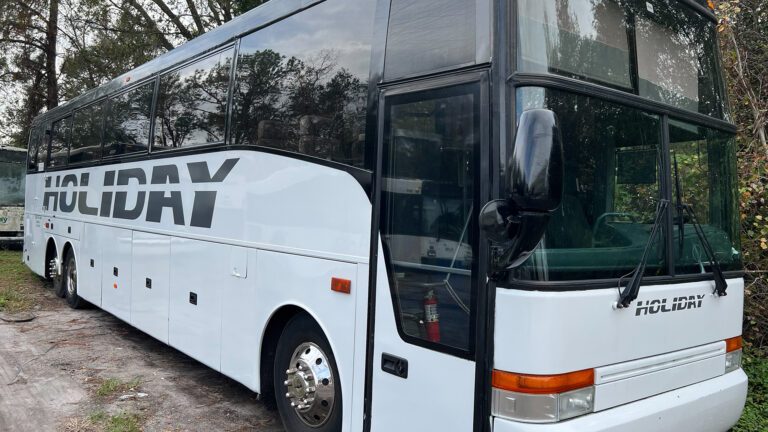
A charter bus keeps your congregation together, handles the driving, and gives you room for gear. For most church outings, it is the safest and simplest option.

A church group charter bus solves several problems at once: one departure time, one headcount, no convoy of nervous volunteer drivers, plus restrooms, air conditioning, and space for coolers and luggage. For more detail, see our church group travel buses planning guide.
When you compare transportation, weigh these criteria:
- Capacity: seats versus your headcount, plus gear
- Amenities: Wi-Fi, chargers, restroom, reclining seats
- Safety record: inspections and driver screening
What to Ask a Charter Bus Provider
Ask direct questions and expect direct answers. A good provider welcomes them.
- Are you approved by the US Department of Transportation?
- How do you screen and train drivers?
- What is your backup plan if a bus breaks down?
If you want to understand what to look for in a motorcoach before you call, our guide on choosing a charter bus explains the vehicle types and features. And when you are ready, our charter bus safety guide shows how to verify a provider step by step.
Draft a Church Group Travel Itinerary With Worship and Free Time
A church group travel itinerary is the hour-by-hour plan for the trip, including travel, meals, activities, and rest. Build it with breathing room.
Then protect free time. A packed schedule exhausts people, especially older members and families with kids.
Share the itinerary before departure in print and digital form. Include departure times, meeting points, and a contact number for the trip leader.
Plan Safety, Supervision, and Emergency Procedures
Safety planning is not optional when you are responsible for a group. Build it in writing before you leave so every adult knows exactly what to do when something goes wrong.
Collect Medical Information and Emergency Contacts
Every participant should have a completed emergency information form on file before departure. The form should capture:
- Full name, date of birth, and home address
- Emergency contact name and phone number, plus a second contact
- Known medical conditions, allergies, and current medications
Keep one printed binder with the trip leader and one digital copy accessible to two designated adults. Do not store medical details in a shared group chat. For youth trips, require a parent or guardian signature on the consent form and a notarized medical release if the trip crosses state lines.
Set Supervision Ratios and Safeguarding Rules
Supervision ratios should match the age and vulnerability of the group. A common pattern for youth trips is one adult for every six to eight youth, with a minimum of two unrelated adults present at all times.
Assign each adult a small group of named participants responsible for headcounts, check-ins, and knowing where those participants are at every stage. Rotate assignments only with a written handoff.
Safeguarding rules to state in writing and review at the pre-trip meeting:
- Two-adult rule for any room or vehicle occupied by minors
- No unsupervised free time for youth
- Clear curfew and room-check procedures
Carry the Right Insurance and Confirm Vendor Coverage
Ask your church’s insurance agent whether the existing policy covers off-site group travel, rented vehicles, and volunteer drivers. Many standard church policies include some coverage but exclude certain activities or require an endorsement for overnight trips.
Confirm what the charter bus company carries. Ask your provider what insurance it carries and whether it can provide a certificate of insurance on request.
Build an Incident Response Plan
An incident response plan is a one-page document every adult carries. It should include:
- The trip leader’s cell number and a backup leader’s number
- The nearest hospital or urgent care for each overnight stop
- A step-by-step response for medical emergency, missing participant, vehicle breakdown, and severe weather
Run a headcount at every boarding and transition, with one adult counting and a second verifying. Skipping the headcount at rest stops is how groups leave someone behind, and the risk rises when the group is large and the stop is short.
Communicate the Plan Before Departure
Hold a pre-trip meeting for participants and, for youth trips, parents. Review the schedule, rules, emergency plan, and contact chain. Give every participant a printed card with the trip leader’s number, each stop’s meeting point, and the emergency procedure summary, paper works when cell service does not.
Request a Charter Bus Quote for Your Next Church Outing
You have the purpose, the checklist, the budget, and the plan.
Request quotes early, especially for peak seasons. Give each provider your headcount, dates, pickup points, and accessibility needs.
Holiday Coach Lines is a family-owned and operated provider with over 138 years of combined experience.
Ready to plan your next church outing? Request a quote and let our team handle the road while you focus on the fellowship.
Your congregation deserves a trip that runs smoothly from the first prayer to the last mile home.
Frequently Asked Questions
How far in advance should you plan a church group trip?
Start the big pieces at least three to six months out for overnight trips, and six to eight weeks for a single-day church outing. That window gives you time to confirm a destination, collect deposits, and lock in a charter bus before peak season fills schedules. Larger groups and holiday weekends need more lead time, so confirm your participant count early and book transportation as soon as dates are firm.
How do you estimate the cost of a church group trip?
Build the church group travel budget per person, not as one lump sum. Add up transportation, lodging, meals, activities, and a small contingency line, then divide by your confirmed participant count. Add a buffer for fuel surcharges and last-minute changes. Charter bus pricing depends on distance, dates, group size, and amenities, so request a written quote rather than estimating from a per-mile guess.
What safety details should church leaders consider when planning group travel?
Collect emergency contacts and any medical or allergy information for every participant, set a supervision ratio for youth, and assign a trip leader with a printed roster. Share a communications plan with parents and family members, including departure and return times. Confirm your charter bus provider is approved by the US Department of Transportation and ask how drivers are screened and what backup vehicle plan exists if a coach breaks down.
How do you organize transportation for a church outing?
Count your participants first, then decide whether personal vehicles or a church group charter bus makes more sense. A motorcoach keeps the group together, removes parking and caravan stress, and gives you room for equipment and supplies. Ask providers about seat capacity, Wi-Fi and charging, driver screening, and backup vehicle availability, then book once your dates and headcount are confirmed.