Table of Contents
- Why Reliable Church Group Travel Buses Matter
- How to Vet Bus Operators for Safety and Reliability
- Choosing the Right Bus Size for Your Congregation
- Church Group Charter Bus Rental: What to Expect
- Understanding Charter Bus Rental Cost
- Church Retreat Transportation and Out-of-Town Trips
- A Practical Planning Timeline and Booking Checklist
- Contingency Planning and Trip-Day Coordination
- Frequently Asked Questions
Last Updated: October 21, 2026
Why Reliable Church Group Travel Buses Matter
Reliable church group travel buses are the difference between a youth trip that builds momentum and a Sunday morning spent apologizing to parents.
The stakes go beyond logistics. When a faith-based organization moves people, it carries trust.
That is why vetting matters more than price shopping. Below, we break down how to choose operators, size vehicles correctly, budget without surprises, and build a trip-day plan that holds up when something goes wrong.
How to Vet Bus Operators for Safety and Reliability
Start with the paperwork, not the sales pitch. A legitimate operator will hand over proof of operating authority and insurance without hesitation, and that willingness tells you more than any brochure. The difference between a reliable church group travel bus and a liability is usually visible before you sign anything, if you know where to look.
Verify Operating Authority and Safety Records
Every motor carrier that operates across state lines must have active operating authority from the Federal Motor Carrier Safety Administration.
A common pattern among reputable operators is a current USDOT number, a clean inspection history, and a willingness to walk you through their SMS scores. If a vendor hesitates to share the number or claims the lookup is unnecessary, treat that as a stop sign.
Confirm Insurance and Contract Terms
Ask for a certificate of insurance naming your church as an additional insured for the trip dates. Confirm the liability limits in writing and check that the policy covers the vehicle type and passenger count you are booking.
Read the contract for cancellation and refund terms, breakdown and replacement-vehicle policy, and who is responsible for driver lodging on multi-day trips. A written breakdown policy should state how quickly a replacement vehicle will arrive and what happens to your deposit if the operator cannot perform.
Screen Drivers and Vehicles
Ask what background checks, drug and alcohol testing, and training drivers complete, and confirm that drivers hold a current medical examiner’s certificate and the correct commercial driver’s license class for the vehicle. For vehicles, ask for the preventive maintenance schedule and the most recent inspection reports. A reputable operator tracks inspections on a fixed interval and can show the log.
Your Charter Bus Safety Checklist
Use this checklist as a charter bus safety checklist when you compare quotes. A vendor that cannot clear every line should not carry your congregation.
- Active USDOT number and operating authority verified in FMCSA’s SAFER system
- Satisfactory safety rating or clean SMS inspection history
- Certificate of insurance naming your church as additional insured
- Drivers with clean motor vehicle records, current medical certification, and proper CDL class
- Documented preventive maintenance program and recent inspection reports
- Written breakdown and replacement-vehicle policy with response times
- Clear cancellation and refund terms in writing
- Named contact reachable on trip day
The most common mistake is booking on price alone and skipping the insurance certificate. If an uninsured operator is in a collision, your church can be exposed to costs the vendor cannot cover.
Choosing the Right Bus Size for Your Congregation
Match the vehicle to the headcount, then add a buffer. Group size drives everything: one bus that is too small forces a second rental, and one that is too large wastes money on empty seats.
| Group Size | Recommended Vehicle | Typical Use |
|---|---|---|
| 10-15 passengers | 15-passenger minibus | Bible study, small prayer group |
| 16-25 passengers | 25-passenger bus | Youth outing, midweek activity |
| 26-40 passengers | 40-passenger charter bus | Regional retreat, choir trip |
| 41-56 passengers | 56-passenger motorcoach | Large event, convention travel |
Minibuses for Small Prayer Groups and Bible Studies
Minibuses handle the small-group trips that larger vehicles make expensive. A 15-passenger minibus keeps a Bible study or prayer group together, parks easily at a retreat center, and gives the leader a flexible schedule for pickup and drop-off.
For groups under twenty, a 25-passenger bus adds breathing room without overshooting the budget. This is the workhorse for weekly activities and short regional travel.
Full-Size Charter Buses for Large Events
Full-size charter buses make sense once a congregation crosses the forty-passenger mark. A 40-passenger charter bus or a 56-passenger motorcoach carries a whole congregation to a faith conference, religious convention, or camp transportation run in one vehicle.
Keeping the group together matters here. One motorcoach means one arrival time, one headcount, and onboard restrooms, Wi-Fi, power outlets, reclining seats, and climate control that make a long out-of-town trip comfortable.
Church Group Charter Bus Rental: What to Expect
A church group charter bus rental is simpler than most planners expect, provided you understand the sequence. You request a quote with your dates, group size, and route; the operator confirms availability and vehicle type; you review the contract and insurance; then you lock the booking with a deposit.
Expect the quote to reflect trip duration, route planning, and any overnight driver requirements. Custom itineraries and flexible schedules are standard for faith-based travel, so tell the operator about every stop: the worship service, the lunch break, the hotel.
Ask whether the driver’s hours are built into the quote. Long out-of-town trips with tight schedules can hit federal driving limits, and a well-planned itinerary avoids a forced stop your group did not budget for.
Understanding Charter Bus Rental Cost
Charter bus rental cost depends on distance, duration, vehicle size, season, and driver time, so no honest operator quotes a flat number before hearing your plan. Pricing for church group travel buses is quoted per trip, not per seat, which is why a full motorcoach often costs less per passenger than several vans. The goal is not the lowest headline rate, it is the most complete itemized quote you can compare apples to apples.
What Drives the Quote
- Vehicle size: larger motorcoaches cost more per day but spread the cost across more passengers. A larger motorcoach costs more per day but spreads the cost across more passengers.
- Trip duration: hourly, daily, and multi-day rates differ, and overnight trips add driver lodging and per diem. Ask whether the driver’s hours are built into the quote.
- Distance and route: fuel and tolls scale with mileage. Ask whether the quote includes deadhead mileage, the distance the bus travels empty to reach your pickup point and return after drop-off. A quote that omits deadhead can look cheaper until the final invoice.
- Waiting time: most operators include a set number of waiting hours; beyond that, an hourly waiting charge applies. Confirm the allowance for stops like a worship service or a meal break.
- Season and demand: peak weekends, holidays, and conference dates command higher rates. Booking in advance usually secures better availability.
- Add-ons: gratuity, parking fees, attraction entry, and driver lodging are usually separate. A customary driver gratuity is often expected; confirm the expectation in writing.
How to Compare Itemized Quotes
Ask every vendor for the same scope in writing: pickup and drop-off points, dates and times, passenger count, vehicle type, waiting-hour allowance, deadhead mileage, tolls, gratuity, and cancellation terms. Then compare line by line.
A practical approach is to build a simple comparison sheet with one column per vendor and one row per line item. The vendor with the most complete quote is usually the easiest to hold to the contract if something changes.
Budgeting for the Whole Trip
Set the bus line item against the rest of the trip budget: lodging, meals, attraction entry, and a contingency reserve. A common pattern is to hold back a small percentage of the transportation budget for waiting time, parking, or a schedule change. That reserve is what keeps a retreat or mission trip from turning a minor delay into a budget problem.
Church Retreat Transportation and Out-of-Town Trips
Church retreat transportation rewards early planning because it combines distance, luggage, and timing.
Book the vehicle around the retreat’s real rhythm: departure after Friday service, arrival before the first session, and a return that does not strand the group late at night.
For mission trips, build in contingency. Long routes and remote destinations make a written breakdown plan essential, and a named trip-day contact keeps group coordination calm if plans shift.
A Practical Planning Timeline and Booking Checklist
Book charter buses for church travel as early as your planning allows, and treat eight to twelve weeks out as a comfortable window for peak seasons. Larger groups and holiday weekends need more lead time.

Work backward from the trip date:
- Twelve weeks out: confirm dates, headcount, and budget; request quotes from vetted operators
- Ten weeks out: compare itemized quotes, verify insurance and authority, check references
- Eight weeks out: sign the contract, pay the deposit, confirm vehicle size
- Four weeks out: finalize the custom itinerary, pickup and drop-off points, and passenger list
- Two weeks out: confirm driver details, trip-day contact, and accessibility needs
- One week out: send the schedule to the group and reconfirm the booking in writing
The single most useful habit is a written itinerary shared with the operator and the group leader. It aligns route planning, driver hours, and passenger expectations before trip day.
Contingency Planning and Trip-Day Coordination
Plan for the day something goes wrong, because that is when preparation pays off.
Assign one group coordinator to hold the passenger list, the operator’s contact, and the itinerary.
Accessibility deserves early attention. Tell the operator about wheelchairs, mobility aids, or passengers who need extra boarding time so the right vehicle and driver support are arranged.
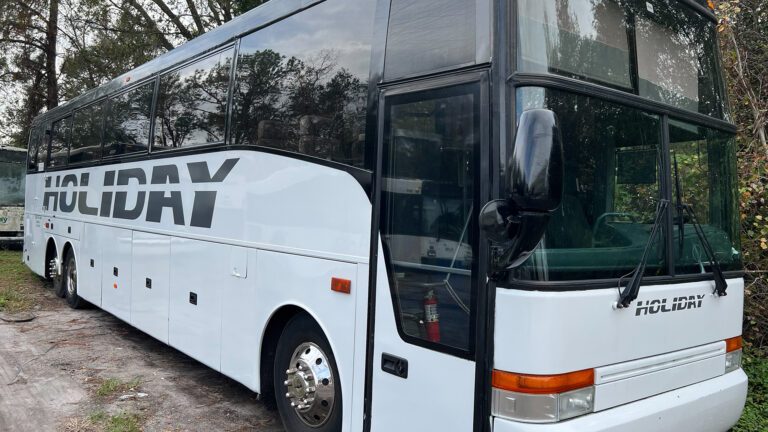
At Holiday Coach Lines, our family-owned team brings over 138 years of combined experience to church group travel, with hand-picked professional drivers, well-maintained motorcoaches, and free Wi-Fi and USB chargers on board.
Frequently Asked Questions
How do you choose a reliable bus service for a church group?
Start by confirming the operator holds active US Department of Transportation authority and carries liability insurance at a level your church’s board requires. Ask for the driver’s safety record and how the company screens drivers. Read recent reviews from faith-based organizations, then request a written quote that lists vehicle type, amenities, and cancellation terms. A short phone call also reveals a lot: a reliable operator answers questions about backup vehicles and trip-day coordination without hesitation. Holiday Coach Lines is approved by the US Department of Transportation and the Interstate Commerce Commission.
How much does charter bus rental cost for a church group?
Charter bus rental cost depends on trip distance, duration, vehicle size, date, and amenities, so there is no single figure that fits every congregation. A local shuttle for a few hours costs less than a multi-day out-of-town trip with overnight driver costs. Larger motorcoaches cost more per hour than a 15-passenger minibus but spread the cost across more seats. Request itemized quotes from two or three operators and compare what is included, such as driver gratuity, tolls, and parking. Ask each operator for current pricing before committing.
What size bus does a church group need?
Match the vehicle to your headcount plus luggage and equipment. A 15-passenger minibus suits small prayer groups, Bible studies, and youth outings. A 25-passenger bus handles mid-size groups and shorter regional trips. For 40 or more travelers, a 40-passenger or 56-passenger charter bus keeps everyone together and adds onboard restrooms and reclining seats. Count chaperones, musicians, and anyone bringing instruments or coolers, then add a small buffer. Tell the operator your final count at booking and confirm the update deadline so the right vehicle shows up.
How far in advance should a church group book a bus?
Book four to six weeks ahead for local trips and eight to twelve weeks for retreats, faith conferences, and holiday weekends when demand is high. Large events that need multiple motorcoaches should be reserved even earlier, especially in peak travel season. If your date is closer than that, call operators directly and ask about availability rather than relying on online forms. Confirm the booking in writing, collect a signed contract, and set a deadline for your final passenger count so the operator can assign the correct vehicle.
Your congregation deserves transportation that shows up on time, keeps everyone together, and lets leaders focus on the trip instead of the logistics. Holiday Coach Lines provides safe, reliable church group travel with professional drivers, a maintained fleet of motorcoaches, and amenities like reclining seats, climate control, and onboard Wi-Fi. Request a quote today and let our team build an itinerary around your group’s dates and destination.