Table of Contents
- Start With a Wedding Transportation Booking Checklist
- How to Estimate Guest Transportation Needs
- Wedding Bus Capacity: Matching Vehicles to Your Guest Count
- Building a Wedding Shuttle Schedule That Works
- What Wedding Transportation Cost Includes (and What It Doesn’t)
- How to Choose a Transportation Provider and Vet the Contract
- Accessibility, Guest Communication, and Day-Of Coordination
- Conclusion: Book Early, Confirm in Writing, Plan a Backup
- Frequently Asked Questions
Last Updated: October 10, 2026
Start With a Wedding Transportation Booking Checklist
Wedding guest transportation is the shuttle, bus, or limo service that moves guests between hotels, the ceremony, and the reception. Book it by working backward from your wedding date and locking each decision before it becomes urgent.
Too many couples call three weeks out, panicked, because they treated transportation as a final-week detail. It’s a logistics project with hard deadlines.
Here’s the checklist we walk couples through:
- Count out-of-town guests and guests who can’t drive
- Confirm hotel room blocks and pickup points
- Get quotes from at least two transportation providers
- Book vehicles 6-9 months before the wedding date
The 12-Month Booking Timeline and Decision Deadlines
The best providers book out early, especially Saturdays in peak season. A workable timeline:
| When | What to Do |
|---|---|
| 12 months out | Estimate guest count, block hotel rooms |
| 9-10 months out | Request quotes, compare providers |
| 6-9 months out | Book vehicles, pay deposit |
| 3 months out | Set route and pickup locations |
| 6-8 weeks out | Finalize the shuttle schedule |
| 2-3 weeks out | Send guests pickup details |
| 72 hours out | Confirm final headcount |
The most common mistake is waiting until the month-of. Popular dates sell out first, and late bookers end up with fewer vehicle options and less control over pickup times.
How to Estimate Guest Transportation Needs
Guest transportation needs equal the number of guests who can’t or won’t drive themselves, not your total guest count, often 50-70% of attendees. Shuttle the people who actually need it. Start with your full guest list, then subtract:
- Local guests driving their own cars
- Guests staying within walking distance of the venue
- The wedding party, if they’re traveling separately
Which Guests Actually Need a Shuttle
Some guests will always need a ride; others are fine on their own. How to sort them:
- Out-of-town guests staying in a hotel block: yes, they need a shuttle
- Elderly guests and guests with mobility needs: yes, and they need accessible vehicles
- Guests planning to drink: yes, a shuttle keeps them off the road
- Local guests with cars: usually no
Overbooking vehicles “just in case” inflates your budget fast. Count the real riders, then add one buffer vehicle only if your numbers are close to a full load.
Wedding Bus Capacity: Matching Vehicles to Your Guest Count
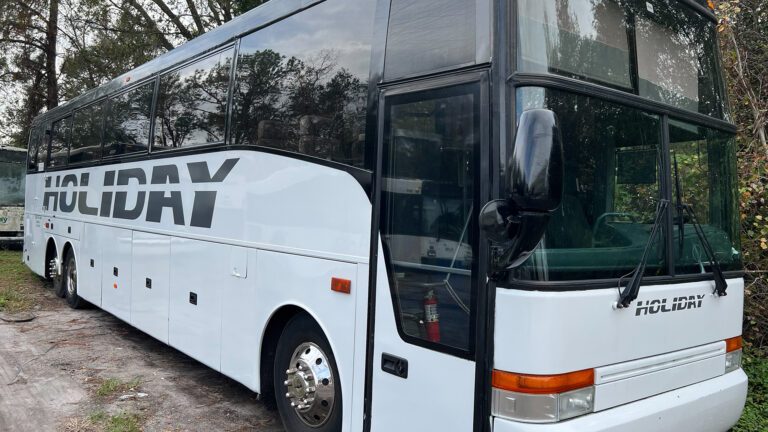
Wedding bus capacity is the number of seated passengers a vehicle holds, and matching it to your guest count is where most budgets are won or lost. A full-size motorcoach seats around 57 passengers; smaller shuttles and vans hold far fewer. The math in practice:
| Vehicle Type | Typical Capacity | Best For |
|---|---|---|
| Motorcoach | ~57 seats | Large guest blocks, long routes |
| Minibus | 20-30 seats | Mid-size groups, tight streets |
| Shuttle van | 10-14 seats | Small groups, frequent loops |
| Limo or party bus | 8-20 seats | Wedding party, short trips |
Run the numbers before you commit. If 120 guests need rides, two 57-seat motorcoaches leave room to spare; two 14-seat vans mean running loops all night.
Ask about the difference between seated capacity and comfortable capacity. A 57-seat coach that’s full feels very different from one carrying 45 guests with room to move. For weddings, it’s usually recommended to leave a little breathing room.
Building a Wedding Shuttle Schedule That Works
A wedding shuttle schedule is a timed plan showing when each vehicle leaves, where it stops, and who it carries. Build it around your ceremony start time, working backward.

Start with these questions:
- What time does the ceremony start?
- How long is the drive from hotel to venue, with traffic?
- How many pickup locations do you have?
- When does the reception end, and when do guests need to leave?
Set your first pickup 60-90 minutes before the ceremony to cover traffic, late guests, and loading time.
Plan the return trip too. Guests leaving in waves need staggered departures, not one final bus at midnight.
The shuttle schedule is the single most important document in your transportation plan. Get it in writing, share it with your provider, and confirm it again 72 hours before the wedding.
What Wedding Transportation Cost Includes (and What It Doesn’t)
Wedding transportation cost depends on vehicle type, hours, distance, and date. Most providers quote an hourly or flat rate per vehicle, plus extras. Pricing varies too much by route and date for a single number, so here’s how quotes are built, so you can compare real numbers instead of guesses.
How Providers Build a Quote
Almost every quote combines four variables:
- Hourly rate or flat rate. Hourly pricing is common for shuttles running loops; flat-rate pricing is common for point-to-point limos and party buses.
- Minimum hours. Most providers set a minimum, often 4 to 5 hours for a shuttle, and 3 to 4 hours for a limo or party bus. If your event is shorter than the minimum, you still pay the minimum.
- Mileage or service area. Some quotes include a set radius (for example, within 30 miles of the provider’s garage) and charge per mile beyond it. Others charge a flat trip fee.
- Date and time. Saturday evenings in peak wedding season (roughly May through October) carry the highest rates. Off-peak dates, weekday weddings, and Sunday brunches are usually cheaper.
A Simple Budgeting Formula
Estimate your transportation budget before requesting a quote:
Estimated cost = (number of vehicles) × (hourly rate) × (total hours, including minimum) + gratuity + overtime buffer + fees
For example, if you need two shuttle vans running a 5-hour loop at an hourly rate, your base cost is 2 × rate × 5. Then add:
- Gratuity: commonly 15-20% of the base, sometimes already built into the quote, ask which.
- Overtime buffer: budget for 30-60 extra minutes in case the reception runs long. Overtime is usually billed in 15- or 30-minute increments at the same hourly rate, sometimes at a premium.
- Fees: parking, venue access fees, tolls, and late-night or holiday surcharges.
Typically Included vs. Often Extra
Typically included:
- Vehicle and professional driver
- Standard fuel and mileage within a set area
- Basic insurance coverage
Often extra:
- Gratuity for the driver
- Overtime if the event runs long
- Parking and venue fees
- Multiple pickup locations
How to Compare Two Quotes Fairly
A low headline price often hides add-ons. To compare apples to apples, put every quote into the same table:
| Line item | Provider A | Provider B | Notes |
|---|---|---|---|
| Base rate (hourly or flat) | Confirm minimum hours | ||
| Estimated total hours | Include buffer | ||
| Gratuity (included or added?) | Ask explicitly | ||
| Overtime rate and increment | 15 or 30 min? | ||
| Mileage / service area limit | Per-mile charge beyond? | ||
| Fees (parking, tolls, surcharges) | Itemize | ||
| Cancellation and deposit terms | Refund window? |
Ask each provider to send a written quote that lists every line item, including whether gratuity is already included. A quote that says “plus gratuity” and one that says “gratuity included” can differ by 15-20% on the same base rate.
For current rates in your area, request quotes from at least two providers using the same date, times, route, and vehicle type so the comparison is meaningful.
How to Choose a Transportation Provider and Vet the Contract
Choose a provider by checking licensing, insurance, and references first, then read the contract line by line before signing. This is the section most couples skim, and the one that determines what happens when something goes wrong on the wedding day.
The Vendor-Vetting Checklist
Before you sign anything, confirm each of these in writing:
- Operating authority. For-hire interstate operators must be registered with the Federal Motor Carrier Safety Administration. Ask for their USDOT number and verify it in the FMCSA database.
- Commercial liability insurance. Request a certificate of insurance (COI) showing coverage limits. Ask whether your venue can be named as an additional insured.
- Driver screening. Ask how drivers are background-checked and trained, and whether they hold a commercial driver’s license (CDL) when required for the vehicle class.
- Vehicle inspection and age. Ask how often vehicles are inspected and how old the fleet is.
Insurance, Cancellation Terms, and Backup Vehicles
These three contract details are the ones couples skim past, then regret.
Insurance. Check that the provider carries commercial liability coverage and can name your venue as an additional insured if required.
Cancellation. Read the cancellation policy closely: how much of your deposit is refundable, and how far out?
Backup vehicles. Ask directly: if a bus breaks down, what happens?
Contingency Planning: Traffic, Weather, and Delays
Even a well-run operation needs a contingency plan. Build these into your schedule and contract:
- Traffic. Add a 15-30 minute buffer to every leg of the route, especially on Saturday afternoons and around stadium or event traffic.
- Weather. Ask how the provider handles severe weather and whether pickup points can shift to a covered entrance.
- Missed pickups. Agree on a protocol: who the driver calls, and who on your side answers.
- Vehicle breakdown. Confirm the backup-vehicle dispatch time in writing.
- Late guests. Decide in advance whether the shuttle waits or departs on schedule. Most providers depart on schedule and run the next loop.
Never book a provider who won’t put their insurance, backup plan, and cancellation terms in the contract. Verbal promises mean nothing when a vehicle fails on your wedding day.
A provider who answers these questions clearly and puts the answers in writing is a provider you can trust on the day. If they dodge the insurance or backup questions, keep looking.
Accessibility, Guest Communication, and Day-Of Coordination
Accessibility, communication, and day-of coordination turn a good plan into a smooth wedding day. Guests need to know where to be and when, and guests with mobility needs require accessible vehicles arranged in advance.
Send a simple guest communication a few weeks out:
Wedding Shuttle Details
Pickup: [Hotel name, address]
Pickup times: [Time 1], [Time 2], [Time 3]
Return shuttles: [Times]
Questions? Text [coordinator name] at [phone]
On the day, assign one person as the transportation contact to talk to the driver, track arrivals, and handle changes so you don’t have to. Confirm your final headcount, pickup times, and route 72 hours before the wedding.
Conclusion: Book Early, Confirm in Writing, Plan a Backup
Wedding guest transportation rewards couples who plan ahead. Count your riders, match vehicles to capacity, build a schedule, and confirm every detail in writing.
That’s where we come in. Holiday Coach Lines is a family-owned charter bus provider with over 138 years of combined industry experience.
If you want guest transportation handled by a team that plans for backups before you ask, request a quote today.
Frequently Asked Questions
How far in advance should you book wedding guest transportation?
Book 6 to 12 months ahead for peak wedding season, and at least 3 to 6 months out for off-season dates. Popular Saturday evenings in spring and fall sell out first because charter buses are shared across weddings, corporate events, and school trips. If your date is inside 60 days, call providers directly rather than relying on online forms, and ask what vehicles they still have open. Confirming early also locks your pickup times before hotel blocks and venue schedules change.
How many people fit on a wedding bus?
A full-size motorcoach typically seats around 57 passengers, while smaller shuttle buses and minibuses hold roughly 14 to 35 depending on the model. For planning, assume you will fill about 80 percent of seats because couples and groups spread out. If 150 guests need rides, that is roughly three motorcoaches or four to five smaller shuttles. Always ask the provider for the exact seat count of the vehicle they are quoting, since layouts vary between companies and models.
What should you ask before booking a wedding shuttle?
Ask for the exact vehicle and seat count, whether the driver is included in the hourly rate, how many stops are allowed, and what happens if a bus breaks down. Request proof of insurance and DOT operating authority in writing. Confirm overtime rates, cancellation policy, and whether the quote includes tolls, parking, and driver gratuity. Get pickup and drop-off addresses, times, and a contact name for the day of the event in the final contract before you sign.
Is it rude not to provide wedding transportation?
It is not rude, but it changes how guests experience your wedding. If the ceremony and reception are at the same venue with ample parking, most guests can drive themselves. When venues are far apart, parking is limited, or many guests are visiting from out of town, a shuttle is a courtesy that keeps people safe and on time. If your budget is tight, run one round trip for the reception instead of a full itinerary.