Quick Summary
Private motorcoach travel means a group books an entire bus for its own use, on its own schedule and route. The group keeps the same vehicle, driver and seats for the whole trip, so everyone travels and arrives together. This suits Florida groups such as weddings, sports teams and corporate crews.
- One bus replaces a convoy of cars, so there is one driver and one arrival time to confirm.
- Full-size motorcoaches seat up to 57 passengers, which affects the base rate you are quoted.
- Divide the total quote by riders actually aboard to get a true per-passenger cost.
- Verify the operator’s USDOT number and insurance certificate before signing any contract.
- Confirm accessibility needs and boarding arrangements in writing at the time of booking.
Table of Contents
- What Private Motorcoach Travel Means for Group Trips
- Benefits of Charter Bus Travel for Groups
- Cost Per Passenger: How Motorcoach Travel Compares
- Charter Bus vs. Driving: Where Each Option Makes Sense
- Motorcoach Amenities That Make the Ride Work
- Safety, Drivers and Accessibility on a Private Motorcoach
- How to Rent a Charter Bus for Your Next Group Trip
- Frequently Asked Questions
What Private Motorcoach Travel Means for Group Trips
Private motorcoach travel means a group books an entire bus for its own use, on its own schedule, along its own route. The bus, the driver and the seats belong to the group for the length of the trip. For planners in Florida who are moving weddings, sports teams, church groups or corporate crews, that exclusivity is the core difference from a shared shuttle or a scheduled service.
A single booking covers the whole party, so nobody waits at a stop or gets split across vehicles. The group leaves together, arrives together and stays together, which matters most when the people on board are depending on one another to be on time.
Private charter does not always mean a luxury trip. It usually means a practical trip: one contract, one point of contact and one set of pickup times. Many groups find that this simplicity saves more planning hours than any single amenity on the bus.
Benefits of Charter Bus Travel for Groups
Charter bus travel gives groups control over timing, routing and seating. Planners set the departure window, add stops as needed and keep the same passengers together for the full day. That control is hard to match when a group is split across cars or waits for a public schedule.
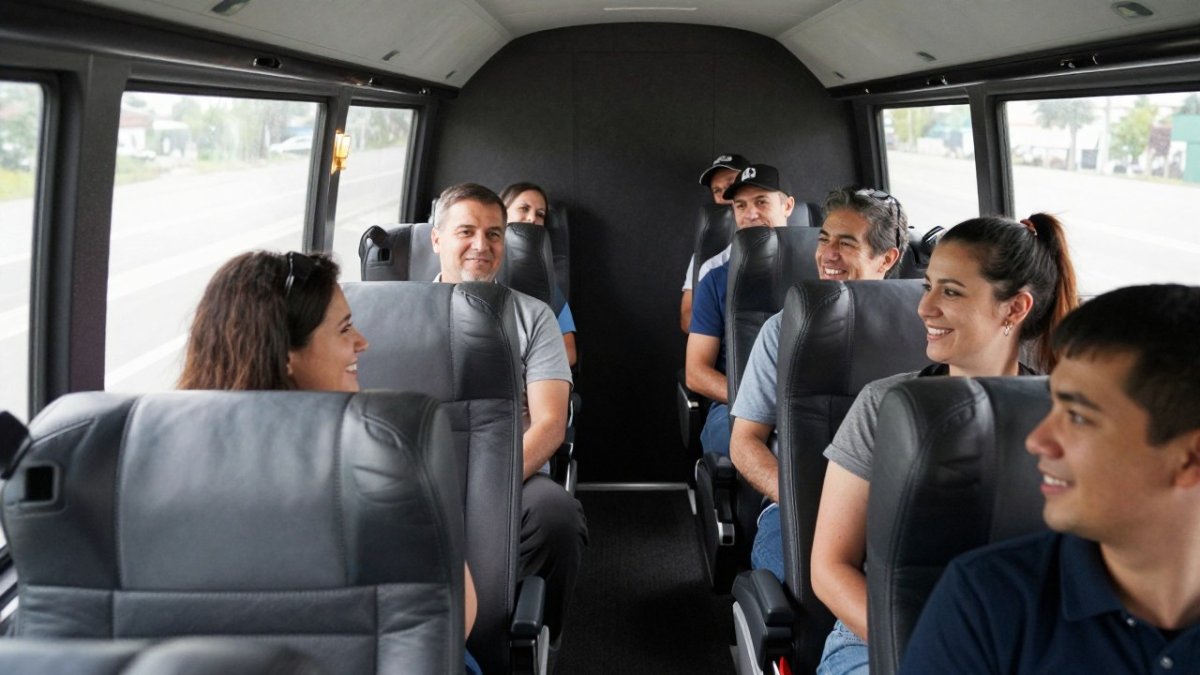
The benefits tend to fall into a few clear areas:
- Fewer vehicles to coordinate. One bus replaces a convoy of cars, so there is one driver to brief and one arrival time to confirm.
- Shared travel time. Passengers can rest, talk or prepare for the event instead of watching the road.
- Consistent group identity. Athletic teams, youth groups and staff teams arrive together, which supports team bonding before the event starts.
- Predictable scheduling. Pickup and drop-off times are set in advance, so event timelines hold.
A common mistake is treating the bus as a simple transfer. The planners who get the most out of charter travel plan the ride as part of the event. They use the trip to brief the group, hand out schedules or get people settled before they reach the venue.
Cost Per Passenger: How Motorcoach Travel Compares
Charter pricing is built from a handful of inputs, and once you understand them you can plan your own per-passenger cost before you request a quote.
The main inputs are:
- Vehicle size and capacity. A full-size motorcoach seats up to 57 passengers; smaller vehicles seat fewer. The vehicle you need affects the base rate.
- Distance and time. Rates may be based on mileage, time, or a combination of both, and the trip’s length and route affect the quote.
- Duration and wait time. Standby time at your venue can affect the quote, so ask how waiting time is handled.
- Fees and pass-throughs. Ask each provider which fees, such as driver gratuity, parking, tolls and fuel surcharges, are itemized separately from the base rate.
- Season and lead time. Availability can be tighter on peak weekends and during busy event seasons, so plan ahead.
The per-passenger math is where charter travel wins or loses. Divide the total quoted cost by the number of passengers actually riding. Spreading the total cost across more riders lowers the cost per passenger, so the number of seats filled affects the per-person price.
Compare that per-person figure against the real alternatives:
- Driving separately. Add fuel for each vehicle, parking at the destination (often the largest hidden cost at stadiums, downtown venues and theme parks), tolls, and the value of the drivers’ time. Multiple cars also multiply the risk of a breakdown or a wrong turn.
- Rail or air. Factor in getting the group to and from the station or airport, baggage fees, and the loss of door-to-door service. For a group moving together to a single venue, the transfer legs often erase the headline savings.
- Rideshare or shuttle vans. Fine for small parties, but the per-person cost climbs quickly once you need several vehicles and a coordinator to keep them together.
When you request quotes, ask each provider to itemize the base rate, hourly or mileage charges, driver gratuity, overnight and wait-time fees, parking, tolls, fuel surcharges and cancellation terms. Put two or three itemized quotes side by side on the same itinerary and the true per-passenger comparison becomes obvious.
Watch out: a quote that looks cheapest on the total can cost more per rider than expected. Always confirm what triggers extra charges before you sign.
The table below lists the main cost inputs a planner should check when comparing charter pricing.
| Cost input | What to check | Note |
|---|---|---|
| Vehicle size | Seats needed | Full-size motorcoach seats up to 57 |
| Distance and time | Mileage, time or both | Affects the base rate |
| Wait time | Standby at venue | Ask how waiting is billed |
| Fees | Gratuity, parking, tolls, fuel | Ask which are itemized separately |
| Season and lead time | Peak weekends and events | Availability can be tighter |
| Per-passenger cost | Total quote divided by riders | More filled seats lowers cost per rider |
Charter Bus vs. Driving: Where Each Option Makes Sense
Driving your own vehicles makes sense for small groups, short trips with few stops or travelers who need full flexibility. A family of four or a pair of staff members heading to a nearby site often does better in personal cars.
A charter bus makes more sense when the group is large, the route is long or the passengers should travel together. Driving a group of 30 or more means several drivers, several parking spots and a higher chance that someone gets separated or lost. Driver fatigue on long highway stretches is also a real consideration, since a professional driver is rested and focused on the road.
Consider a charter bus when:
- The group has 20 or more passengers
- The trip involves multiple stops or a long highway run
- Everyone must arrive together for a timed event
- Parking at the destination would be difficult or costly
Driving remains the better choice for very small parties, one-off errands or trips where passengers need full flexibility to come and go.
Motorcoach Amenities That Make the Ride Work
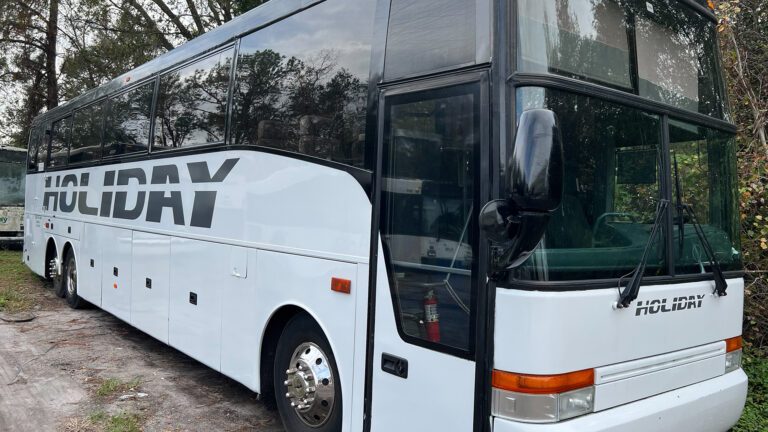
Holiday Coach Lines motorcoaches seat 57 passengers in reclining seats, with air conditioning, free Wi-Fi and USB chargers. Those features help a group stay connected, keep devices charged and rest between stops.
Amenities matter most on longer trips. Free Wi-Fi lets staff members keep working during a corporate excursion. USB chargers keep phones alive for photos, schedules and messages. Reclining seats make it easier for older passengers or sports teams to rest before a game.
Before you book, ask the provider what the bus includes, how many seats it has and whether the amenities are working on the day of the trip. Equipment details are part of the planning, not an afterthought.
Safety, Drivers and Accessibility on a Private Motorcoach
Safety on a charter bus is not a slogan; it is a paper trail you can check before you book.
Operating authority. Interstate charter operators are required to hold federal operating authority and a USDOT number. Ask for the USDOT number and look it up in the FMCSA’s public database to confirm the carrier’s status.
Driver qualifications. Ask how the operator screens its drivers and how it manages driver hours. A rested, screened driver is an important safety factor on any group trip.
Vehicle maintenance and inspections. Ask to see the maintenance schedule and the most recent inspection documentation for the vehicle assigned to your trip.
Insurance. Confirm the operator carries liability coverage at the levels your organization requires, and ask for a certificate of insurance naming your group or venue if needed. Schools, churches and municipalities often have minimum coverage requirements written into their own policies.
Accessibility. Groups are not interchangeable, and neither are buses. Accessibility needs should be raised at booking so the right vehicle and pickup points can be assigned. Tell the operator up front about:
- Passengers who use wheelchairs or mobility aids, and whether they transfer or remain in the chair
- Older passengers who need extra boarding time or assistance with steps
- Luggage, sports equipment, instruments or coolers that affect storage and loading
- Families traveling with young children and car seat needs
Boarding arrangements, curb access at each stop, and the amount of walking between the bus and the venue all matter for a group with mixed mobility. Raise them during booking so the right vehicle and the right pickup points are assigned.
A short verification checklist before you sign:
- Look up the USDOT number and confirm active authority and insurance.
- Ask how drivers are screened and how hours-of-service limits are enforced.
- Request the maintenance and inspection record for your assigned vehicle.
- Get a certificate of insurance if your organization requires one.
- Confirm accessibility features and boarding needs in writing.
Watch out: a low quote from an operator who cannot produce a USDOT number, insurance certificate or inspection record is a risk worth weighing carefully.
How to Rent a Charter Bus for Your Next Group Trip
Start by setting the basics: date, passenger count, pickup and drop-off points, and the time you need to arrive. Those four details let an operator confirm availability and give a realistic quote. For a wedding or tournament, also note any luggage, equipment or waiting time at the destination.
Then follow these steps:
- Confirm your headcount and route. Give the operator your passenger number and every stop.
- Request an itemized quote. Compare providers on the same details.
- Ask about availability. Book as early as you can, especially for peak weekends and sports seasons.
- Review the contract. Check cancellation, deposit and change terms before you sign.
- Brief your group. Share the pickup time, meeting spot and what to bring.
Watch out: confirm your pickup location and time in writing a few days before the trip. Last-minute changes are the most common source of delays.
Ready to plan your group trip? Reserve a charter bus with Holiday Coach Lines to check availability and request a quote for your date. For a deeper walkthrough of renting in Florida, read our Florida charter bus and motorcoach rental guide. You can also review how much a small-group bus rental costs and how charter bus rental costs in Florida compare for your party size.
Holiday Coach Lines offers charter bus services with 57 reclining seats, air conditioning, free Wi-Fi and USB chargers. Request a quote today to plan your group trip.
Frequently Asked Questions
What are the advantages of using private transportation for a group?
Private transportation lets a group travel on its own schedule, with one vehicle, one driver and no one responsible for navigation or parking. For weddings, team trips and church outings, this keeps everyone together and reduces the number of separate arrivals and departures to coordinate. Pricing depends on the route, dates, passenger count and any additional stops, so request a quote from Holiday Coach Lines for current rates for your specific trip.
Is a private motorcoach more cost-effective than driving separately?
It often can be, because the cost of one vehicle is shared across many passengers instead of multiplying fuel, tolls, parking and driver time for each car. The actual comparison depends on group size, distance and how many cars you would otherwise need. For an accurate estimate for your group, contact Holiday Coach Lines for a quote based on your dates and route.
What amenities are commonly available on a private motorcoach?
Holiday Coach Lines motorcoaches include 57 reclining seats, air conditioning, free Wi-Fi and USB chargers. These features help passengers rest, stay connected and work during longer trips. Amenity availability can vary by vehicle, so confirm specific features when you book.
How far in advance should a group book a charter bus?
Booking lead time depends on the season, the number of buses needed and the dates of your event. Groups with a fixed date, such as a wedding or tournament, should reserve as early as possible, especially during peak periods. Contact Holiday Coach Lines to check availability for your specific date.